
Mathematics
St Gerard’s Catholic Primary School
‘Walk then as Children of the Light’

Maths Vision
Our vision is for all children at St Gerard’s Catholic Primary School to experience an outstanding mathematical education, that will lead to a lifelong understanding and love of all elements of mathematics.
Maths Intent
At St Gerard’s we intend:
To develop a life-long love of maths- to value the subject and understand its importance in everyday life.
To develop a ‘can do’ attitude, especially when reasoning and problem solving. To demonstrate resilience working both independently and collaboratively.
To have confidence to express their ideas fluently and talk about their subject using mathematical language.
To broaden children’s knowledge and understanding of how mathematics is use in the wider world by making rich and varied real life connections.
To equip the children for the challenges of the world they live in.
To provide the children with a wide range of models, visual manipulatives and practical resources to develop a deep conceptual understanding alongside procedural fluency.
In line with teaching the National Curriculum Objectives for Mathematics, our intent is also that all pupils:
• become fluent in the fundamentals of mathematics, including through varied and frequent
practice with increasingly complex problems over time, so that pupils develop conceptual
understanding and the ability to recall and apply knowledge rapidly and accurately
• reason mathematically by following a line of enquiry, conjecturing relationships and
generalisations, and developing an argument, justification or proof using mathematical
language
• can solve problems by applying their mathematics to a variety of routine and non-routine
problems with increasing sophistication, including breaking down problems into a series of
simpler steps and persevering in seeking solutions
Maths Implementation
Implementation: In St Gerard’s School, we follow a mastery approach (the 5 Big Ideas) using the National Curriculum for Mathematics (2014) as the basis of our mathematics programme. We are committed to ensuring that all pupils achieve mastery in the key concepts of mathematics, appropriate for their age group, in order that they make genuine progress and avoid gaps in their understanding, as they move through education.
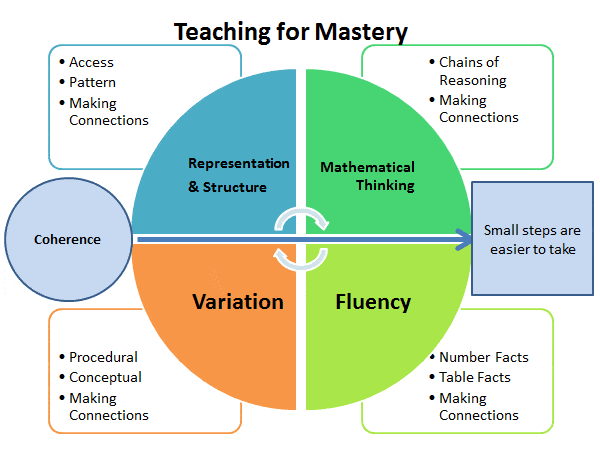
We mainly follow the White Rose scheme for mathematics (WRM). This is used on a daily basis from Reception to Y6. We also value supplementing this with number of additional maths resources. NCETM is used to support closing any gaps in learning. Ready to progress documents from WRM and NCETM are guidelines for progression. Morning maths work and retrieving skills work follows the ‘Planpanion’ scheme of work.
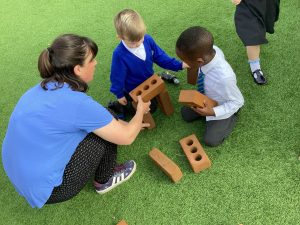
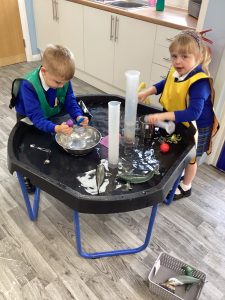
We use the CPA approach to help pupils understand mathematics and to make connections between different representations.
Concrete – children have the opportunity to use concrete objects and
manipulatives to help them understand and explain what they are doing.
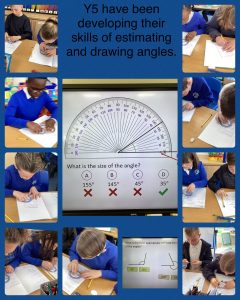
Pictorial – children then build on this concrete approach by using
pictorial representations, which can then be used to reason and solve
problems.
Abstract – With the foundations firmly laid, children can move to an
abstract approach using numbers and key concepts with confidence.
Mathematical Vocabulary
Our children are constantly exposed and immersed in developing their vocabulary acquisition. This key mathematical language, increases student’s knowledge and understanding of not only the specific matter they are currently studying, but of the world they live. Maths lessons begin with a review of previous lesson vocabulary and the sharing of the current lesson vocabulary.
Morning Maths and Daily Maths Retrieval Skills
The ‘Planpanion’ maths scheme is used to deliver daily morning maths sessions and maths recall skills. We make sure that daily, all pupils access morning maths- 5 a day. This is followed by a fluency skills focus where prior knowledge is retrieved. Class teachers model retrieval on a Monday and children continue with these linked skills tasks throughout the rest of the week.
Maths Lessons
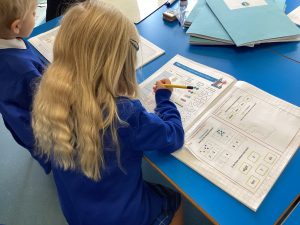
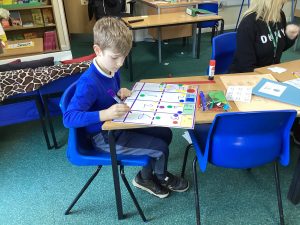
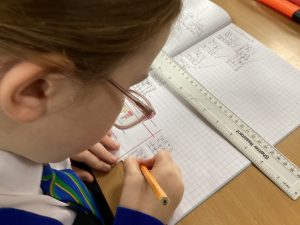
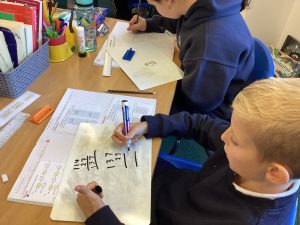
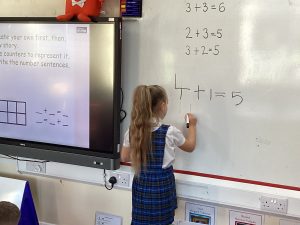
Maths is taught daily and children are given the opportunity to demonstrate their understanding and apply them independently.
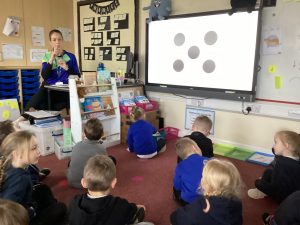
Mastering Number is delivered, daily, from Reception to Y2. Children learn the basis of number systems and counting through a step by step progressive program of study.
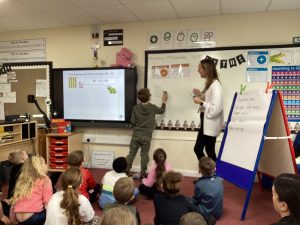
A typical Maths lesson at St Gerard’s is engaging by creating excitement for learning through stimulating contexts. Our main maths lesson delivery follows WRM and is built up around a small step learning objective, which is delivered as part of a unit of work. Each lesson begins with reviewing an element of the previous lesson- looking at prior and new vocabulary, working on fluency skills, which are then used to tackle problem solving and reasoning tasks. Some children are challenged to take their learning further through ‘next steps’ tasks.
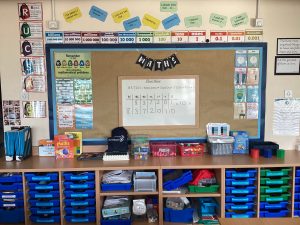
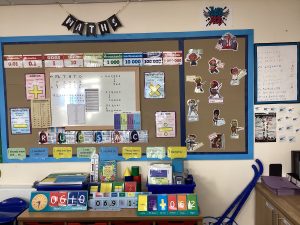
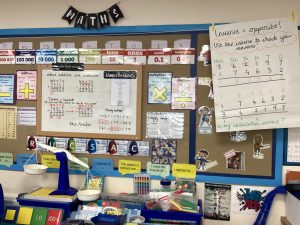
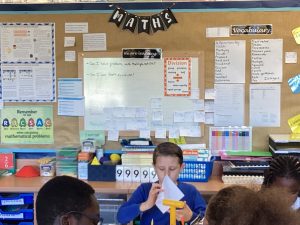
Class working walls are used as a tool within all maths lessons. Teachers and children refer to them to support learning and add to them as lessons progress.
Assessment
A range of assessment tools are in place to assess attainment and progress of children. Assessment during the learning focuses on the component knowledge that pupils have learned.
Daily ongoing assessment provides opportunities for children to consolidate their learning and allows teachers to respond directly to gaps in learning.
EYFS teachers make daily assessment of small steps in mathematical learning, against the ELGs. These are formally logged at two points in the academic year (February and July)
At the end of each unit of work, the children (Y1-Y6) complete an ‘End of Unit Assessment’. The outcome of this is used by the teacher to ensure that any identified gaps in understanding can be addressed before the next unit is taught. Results, based on the small steps provide an overview of achievement in each specific area within the programme of study which informs teachers planning. This data informs judgements made at the end of the term as to the extent that each child has achieved the expectation for their year group.
Teachers administer a termly arithmetic paper and a reasoning and problem-solving paper (Y1-Y6) which specifically links to the coverage for that term. The results of these papers are used to identify children’s ongoing target areas, which are communicated to the children, as well as to parents and carers at Parents Evening. They are also used alongside the end of unit assessments and outcomes of work, to inform the attainment and progress of each child.
Impact
When pupils leave our school, our mathematics curriculum will have ensured that they have developed quality mathematical skills and a life-long love of mathematics. They will see the importance of mathematics in the world they live in.
They will have firm foundations in mathematics and will be well placed to make good progress at Key Stage 3 and beyond so that they are mathematically equipped for life.
Useful parent web links.
Maths-
Top Marks, Hit the button
https://www.topmarks.co.uk/maths-games/hit-the-button
Times Tables Rock Stars-TTRS- all pupils have individual logins set by their current class teacher
https://www.topmarks.co.uk/maths-games/hit-the-button
Maths Zone
Maths and Reading Links
Don’t forget you can enjoy maths and reading together – some recommended reads below: keep checking back for new ideas!
Let us know if you have a favourite which we can add to the list!
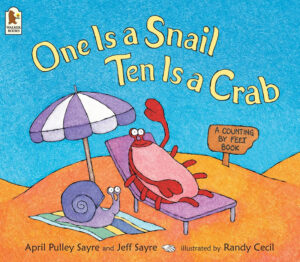
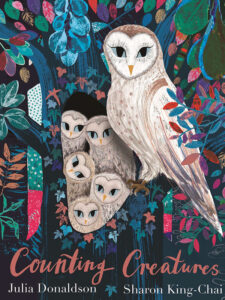
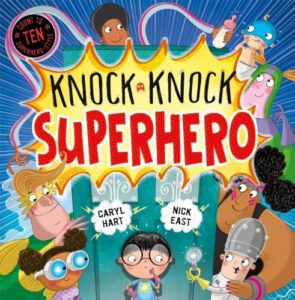

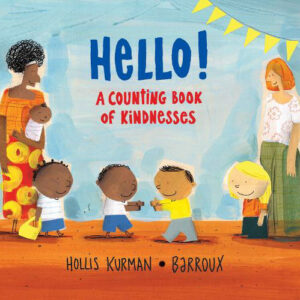
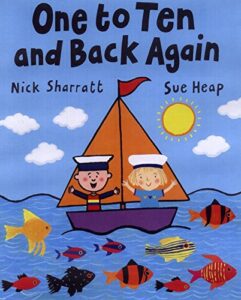
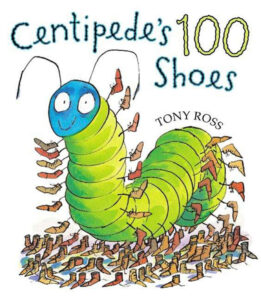
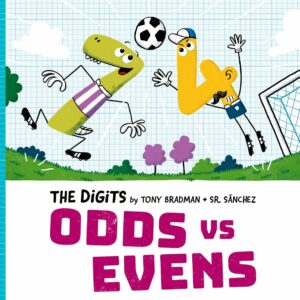
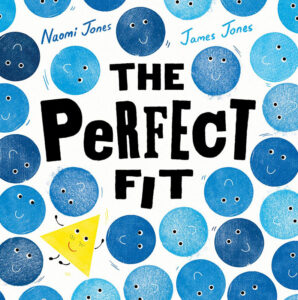
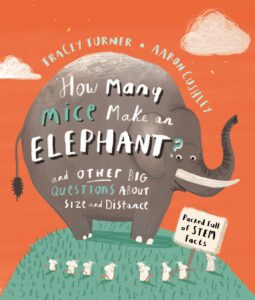
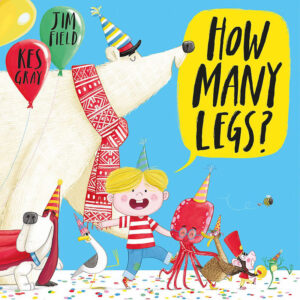

Spend some time looking at our ‘Marvellous Mathematics Gallery’!
Class Maths Working Walls
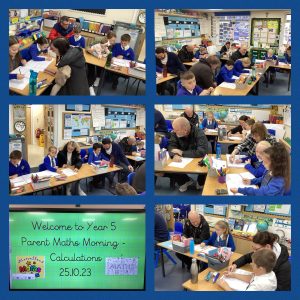
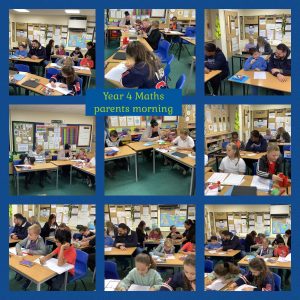
Parent & Pupil Maths Sessions
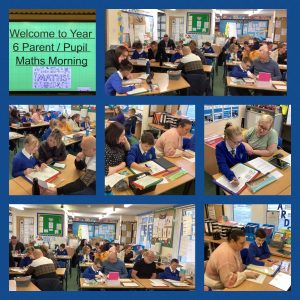
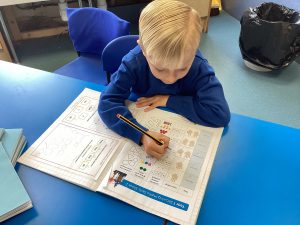
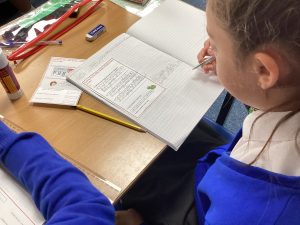
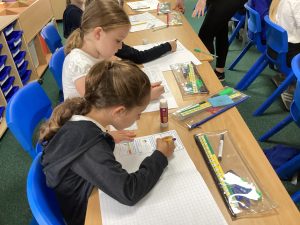
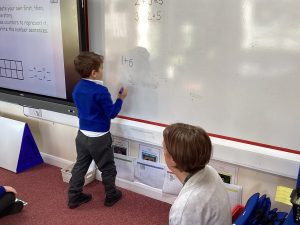
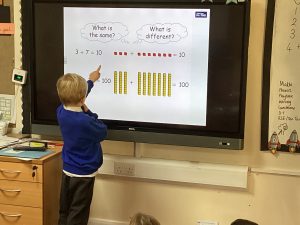
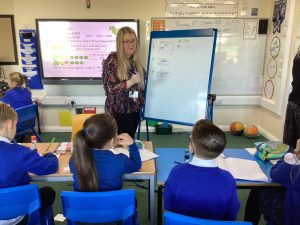
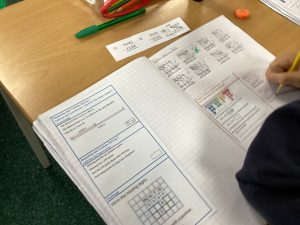
Maths Lessons


- 2024-2025 Calculation Policy using CPA inc fractions.docx document1.2 MbFeb 13th, 2026

- 2024-2025 Calculation Policy using CPA inc fractions.docx.pdf pdf8.0 MbSep 15th, 2024
- Maths policy 2024-2025.pdf pdf149.4 KbSep 15th, 2024
- Maths progression chart.docx.pdf pdf219.3 KbApr 11th, 2024
- Maths Vocabulary Progression Overview (2024-25.docx.pdf pdf183.9 KbSep 15th, 2024
- St Gerard’s Maths Long Term Plan WRM EYFS-Y6 2024-25.docx.pdf pdf146.0 KbSep 15th, 2024
- Year 4 Multiplication check Handout for parents.docx.pdf pdf293.2 KbApr 11th, 2024